Design Question
What would you change if this part of Paper City had to serve twice as many people?
How simple choices can make a paper project more thoughtful and less wasteful.
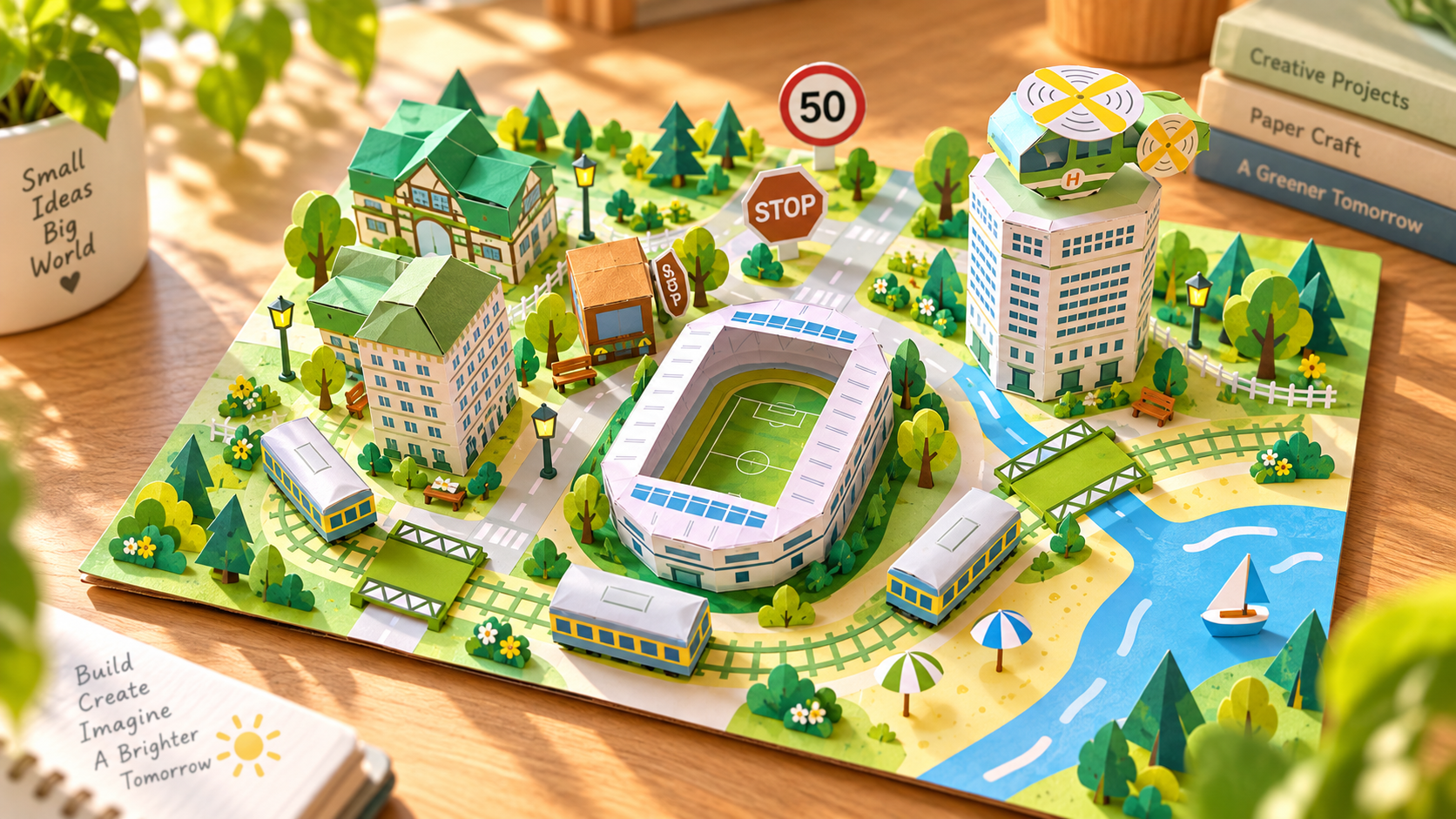
This section goes deeper into the project with clear explanations, design thinking and visual examples.
Paper is lightweight, easy to shape and accessible. It allows fast experimentation without specialist equipment.
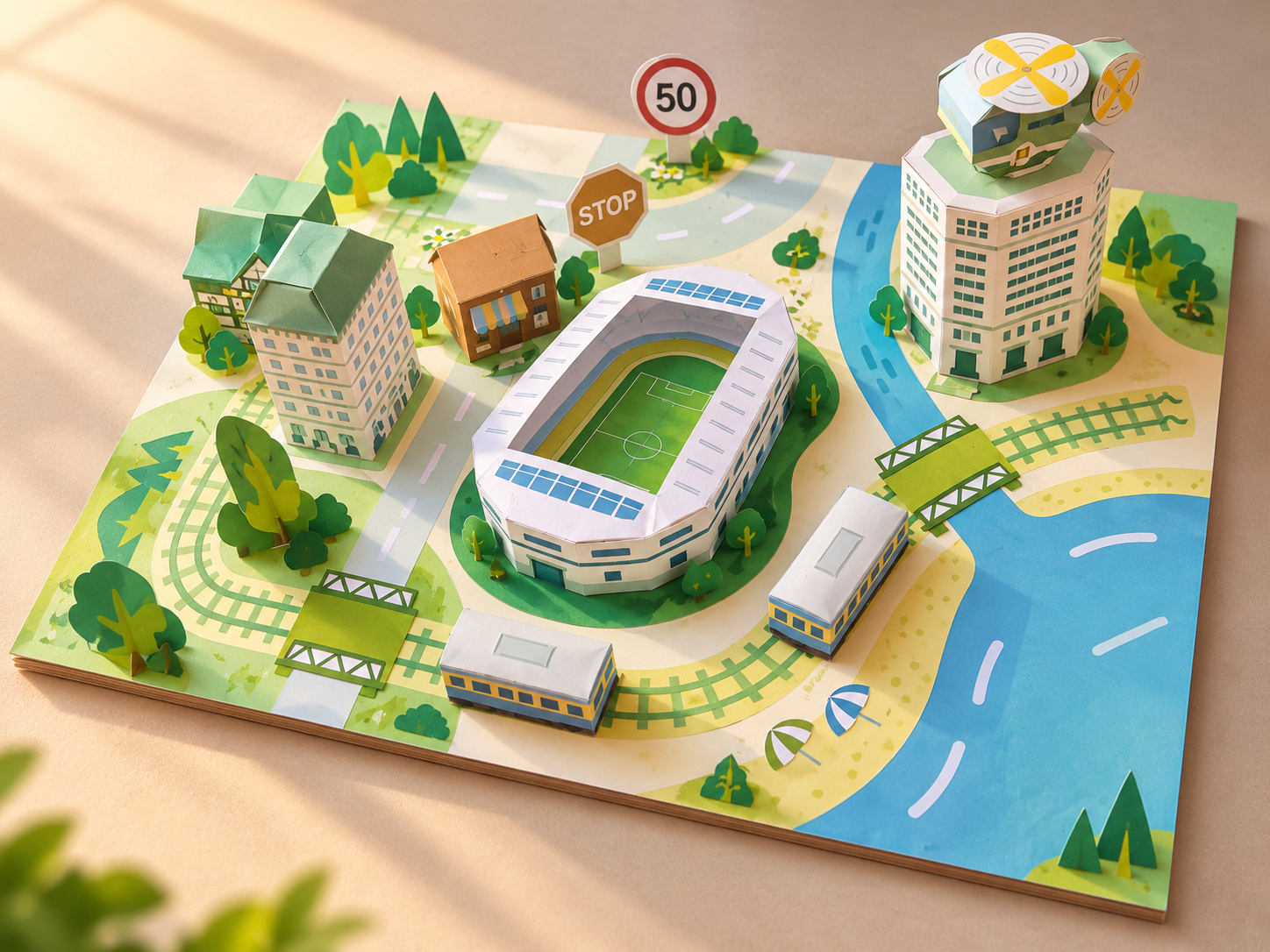
Small leftover pieces can become signs, trees, roof details or reinforcement tabs.
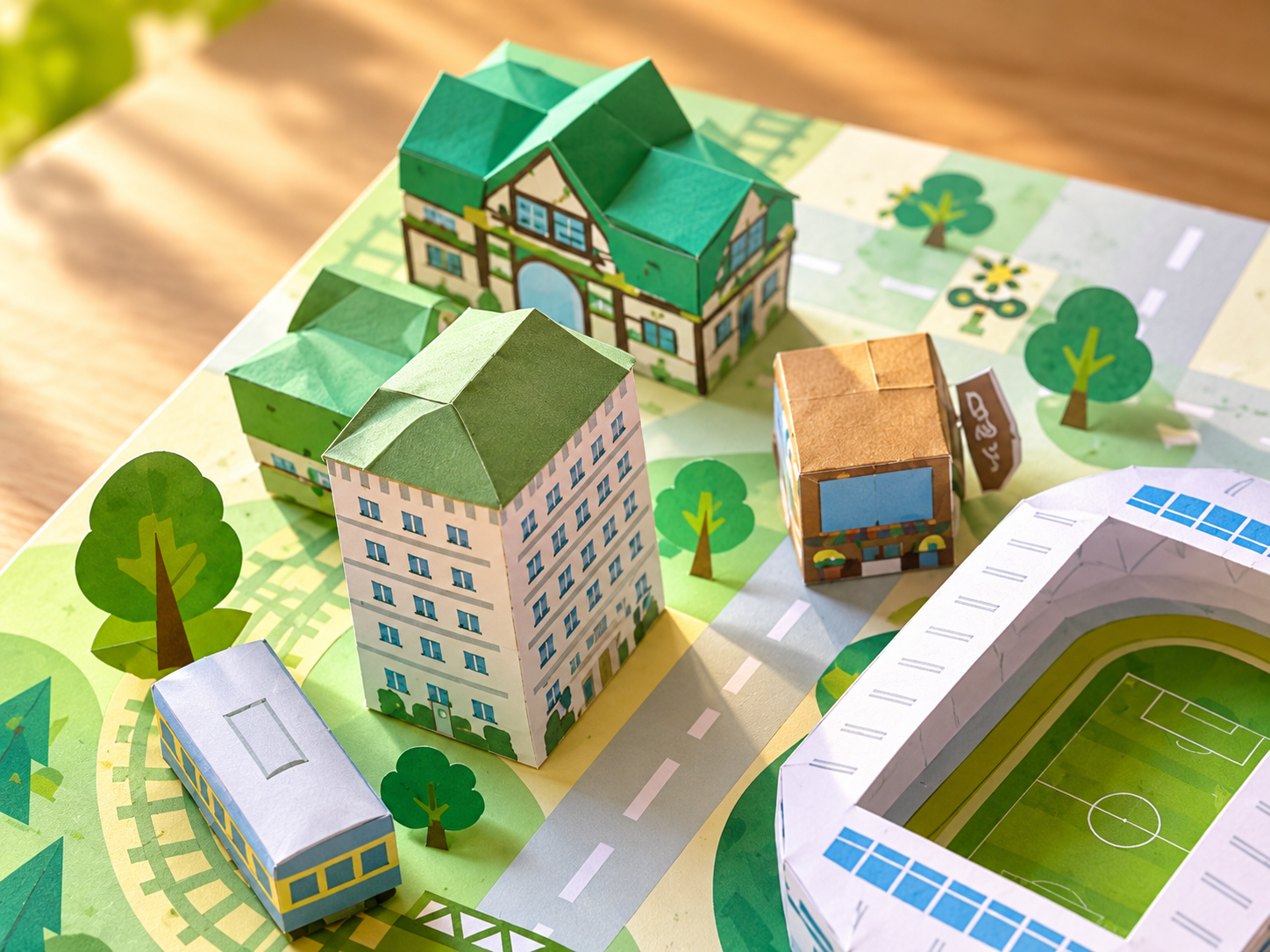
Good planning reduces unnecessary waste and avoids remaking large pieces.
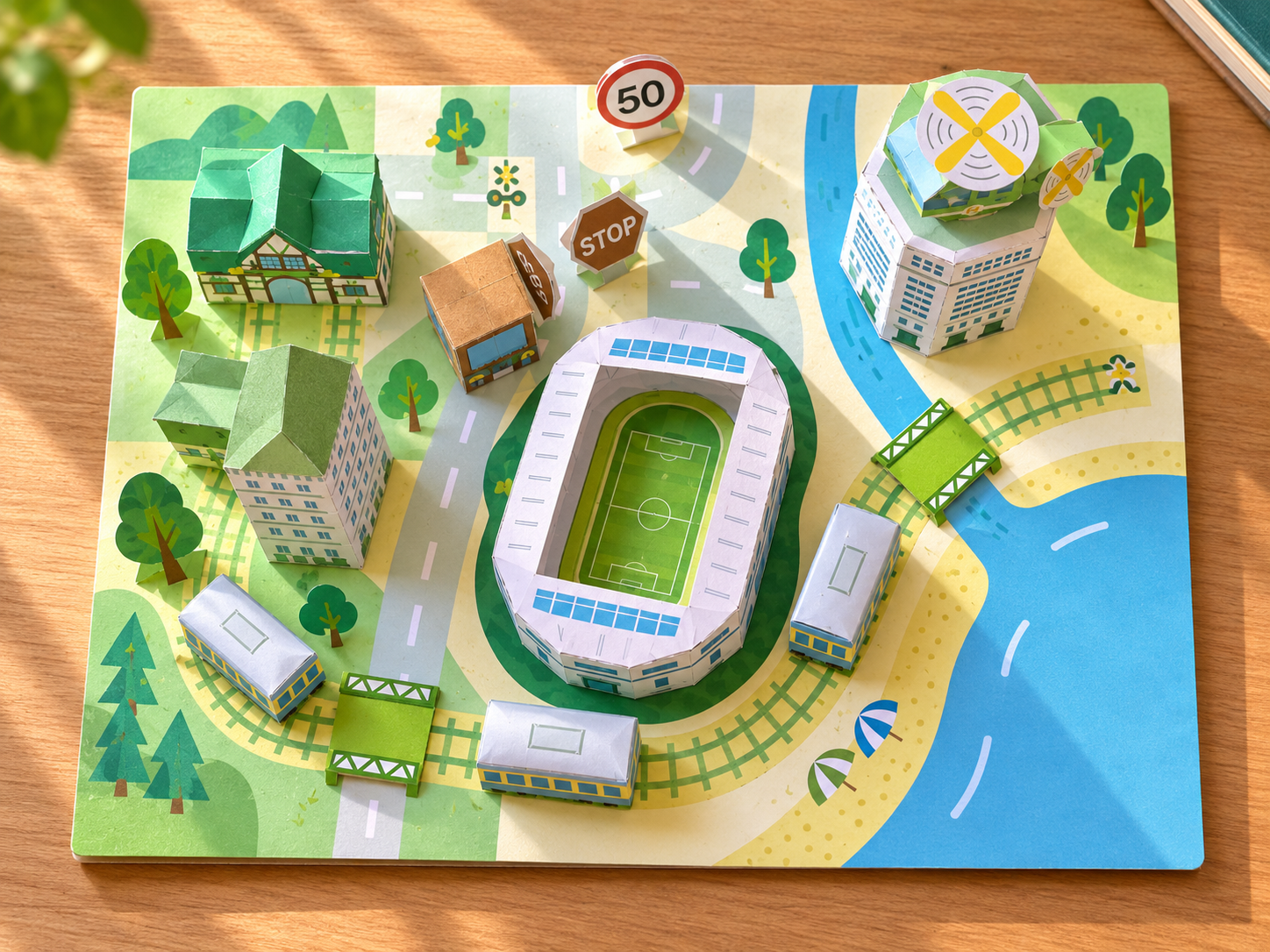
A quick rough paper prototype can reveal size and fit problems early.
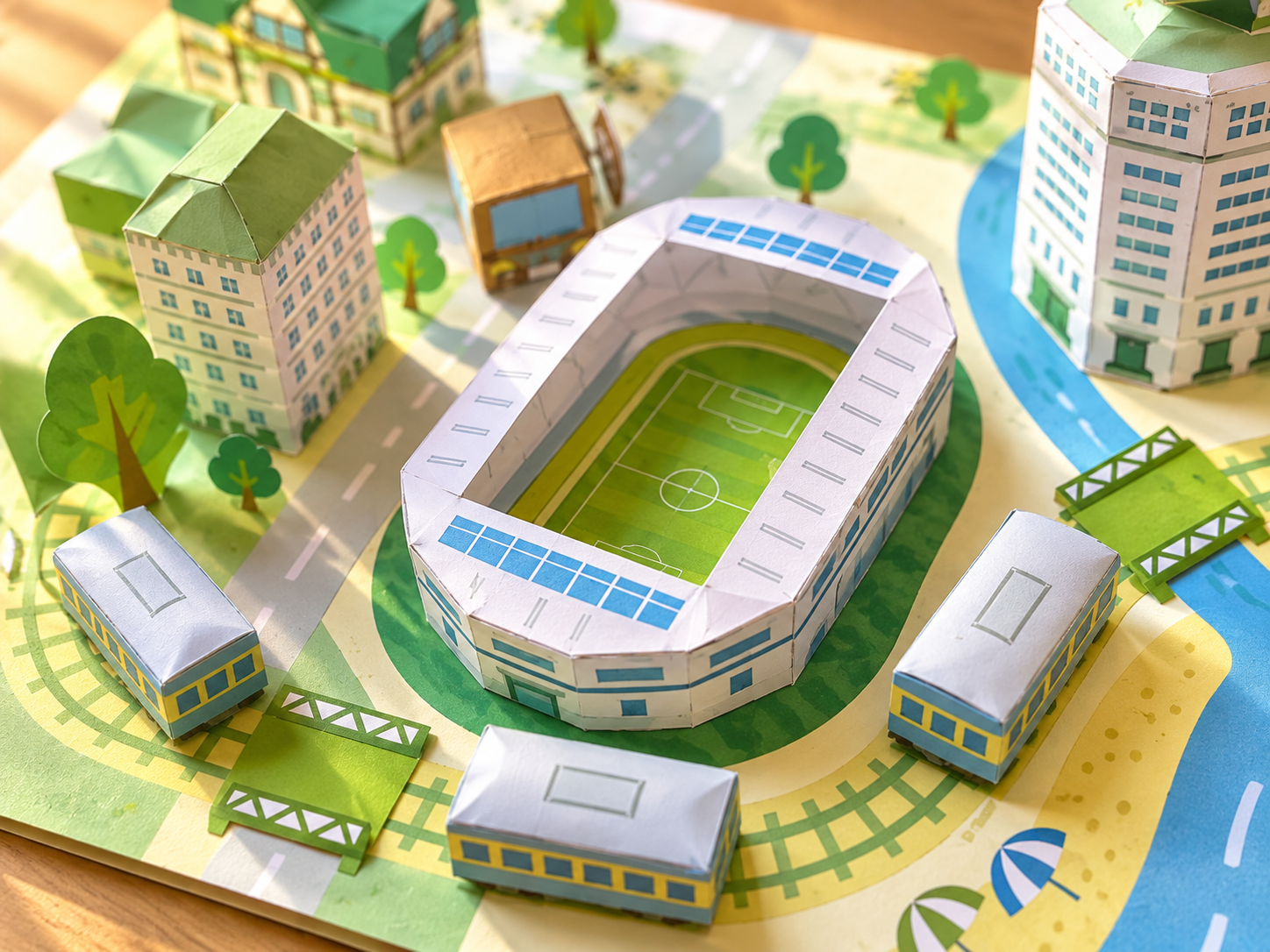
Sustainability is also about using materials thoughtfully, extending their usefulness and avoiding waste.
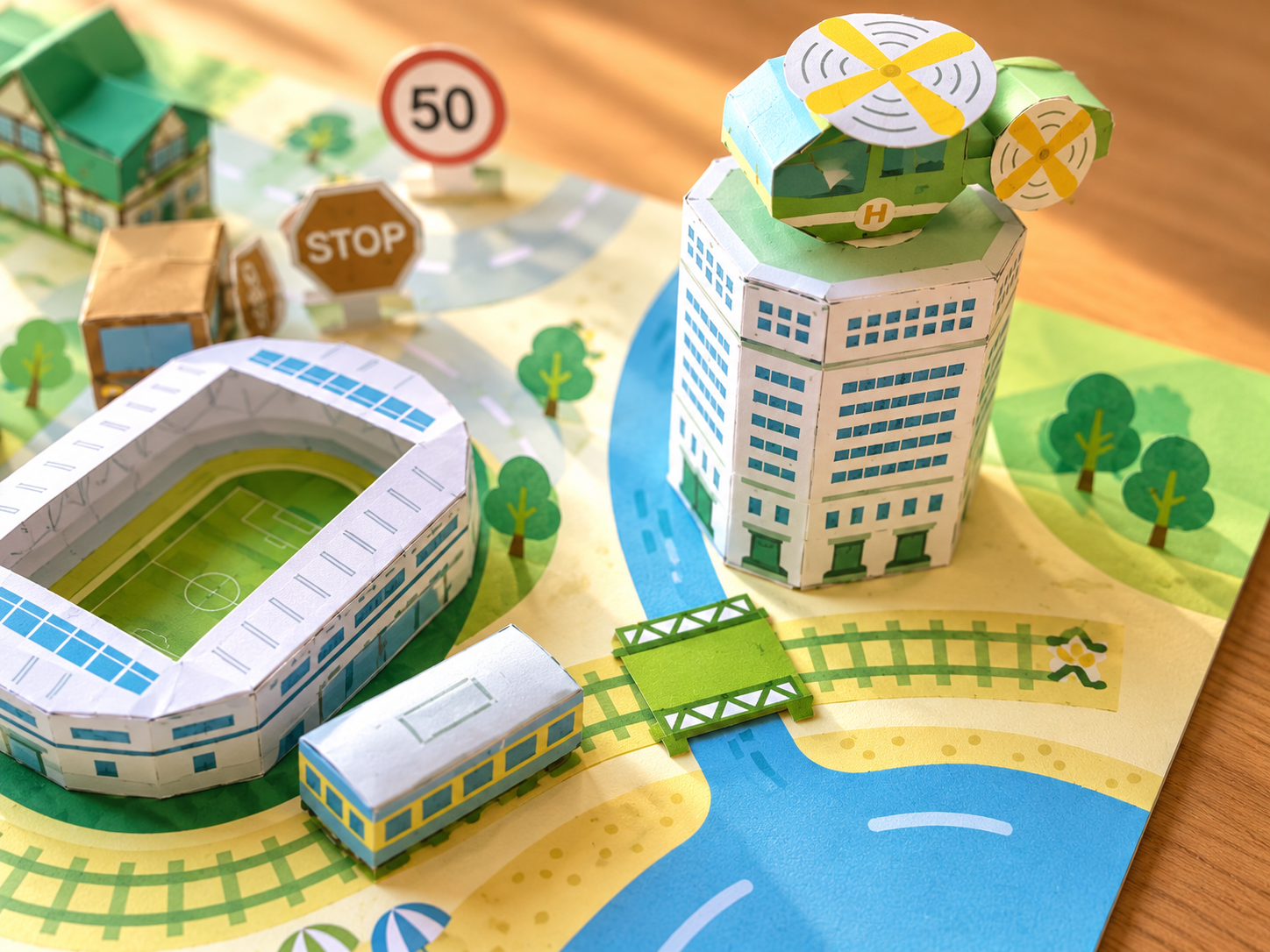
The model could include more visible environmental features in future versions.
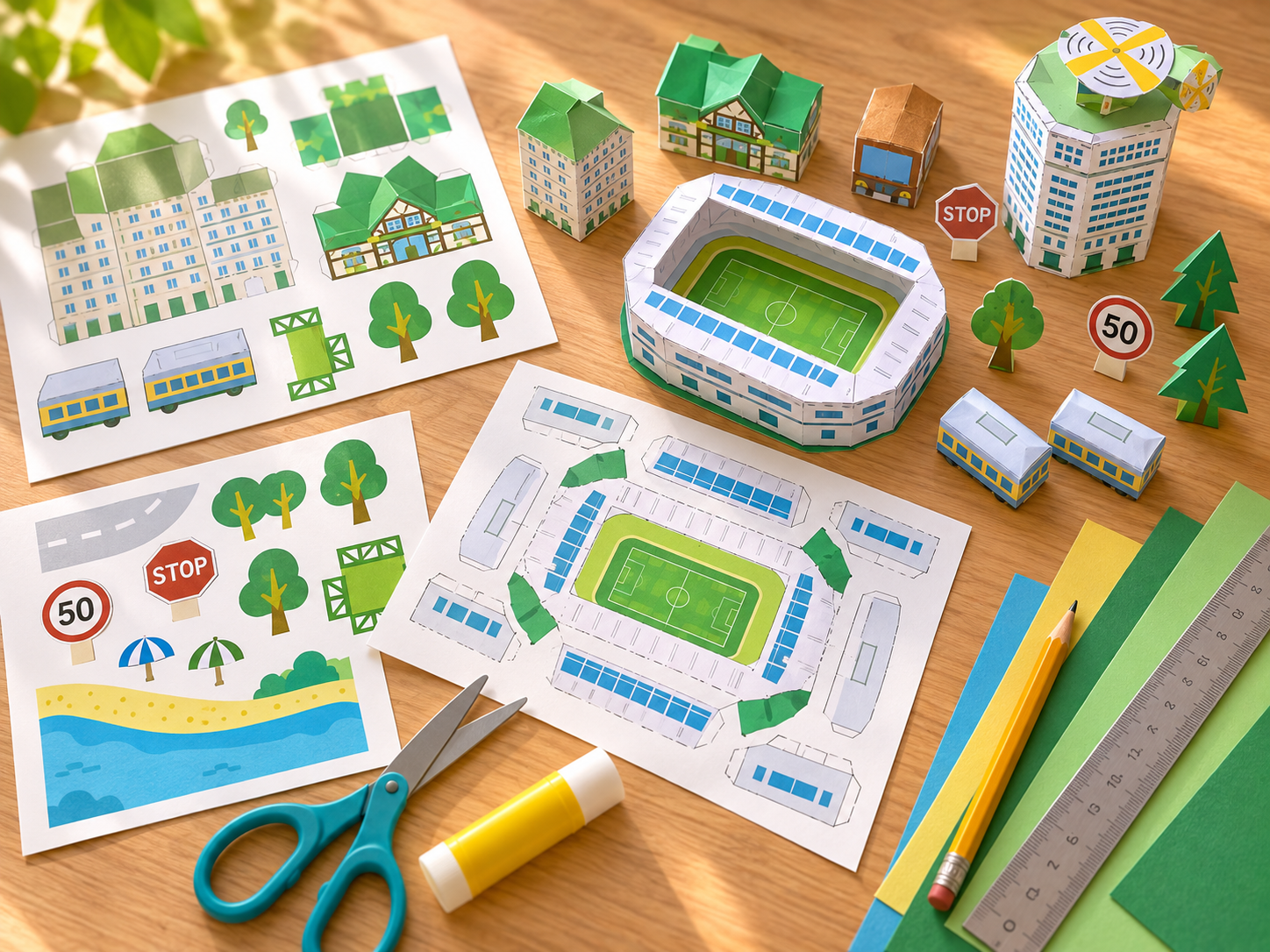
What would you change if this part of Paper City had to serve twice as many people?
How could the same area use less material, create more shade or support more greenery?
Which paper component would be hardest to remake accurately, and how could the template be improved?