Design Question
What would you change if this part of Paper City had to serve twice as many people?
The full story of how a paper model became a complete miniature city.
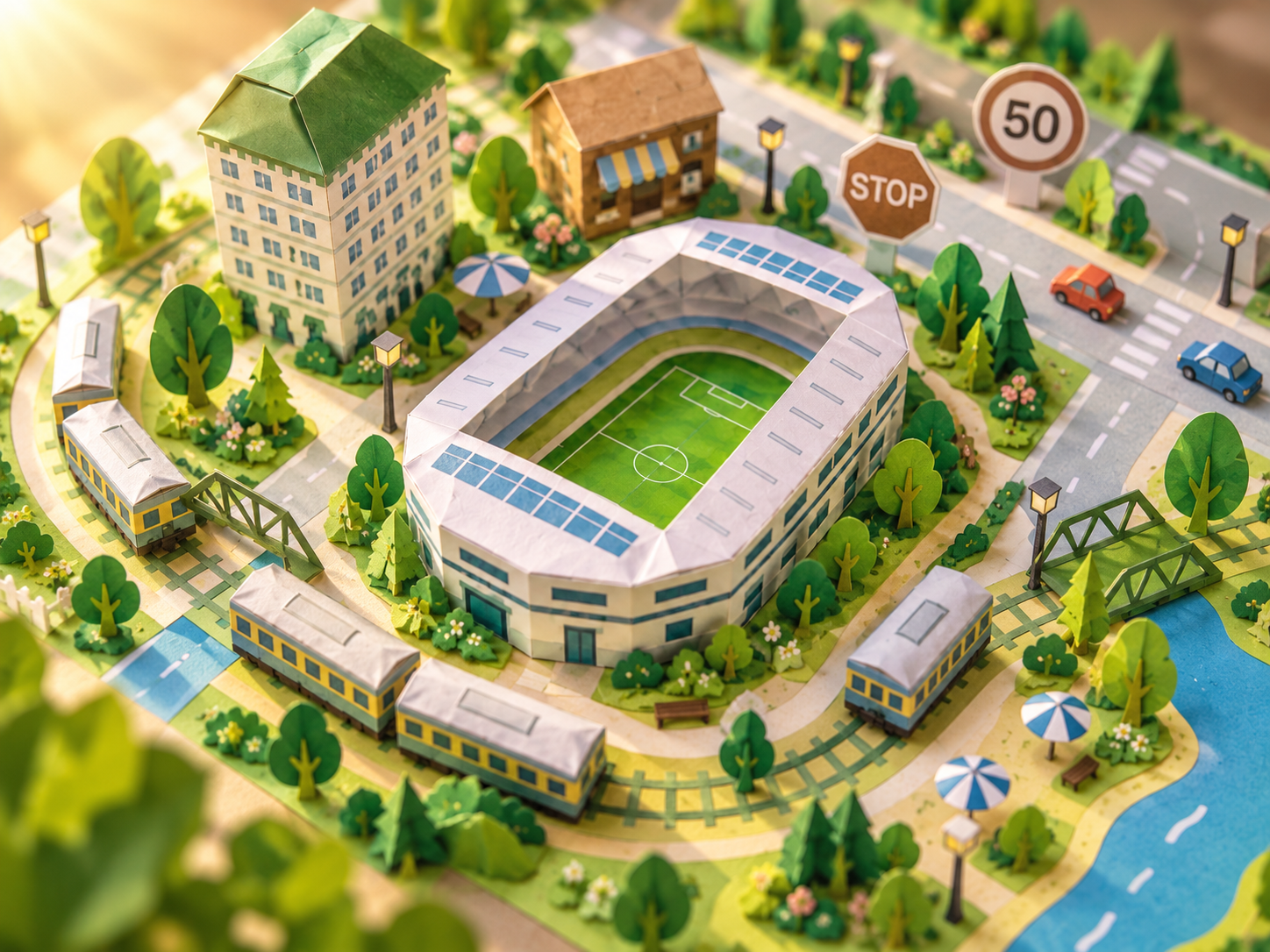
This section goes deeper into the project with clear explanations, design thinking and visual examples.
The project began with the idea of turning a very ordinary material into something that feels much larger than the material itself.
I wanted the model to feel like a real place rather than a collection of disconnected paper objects.
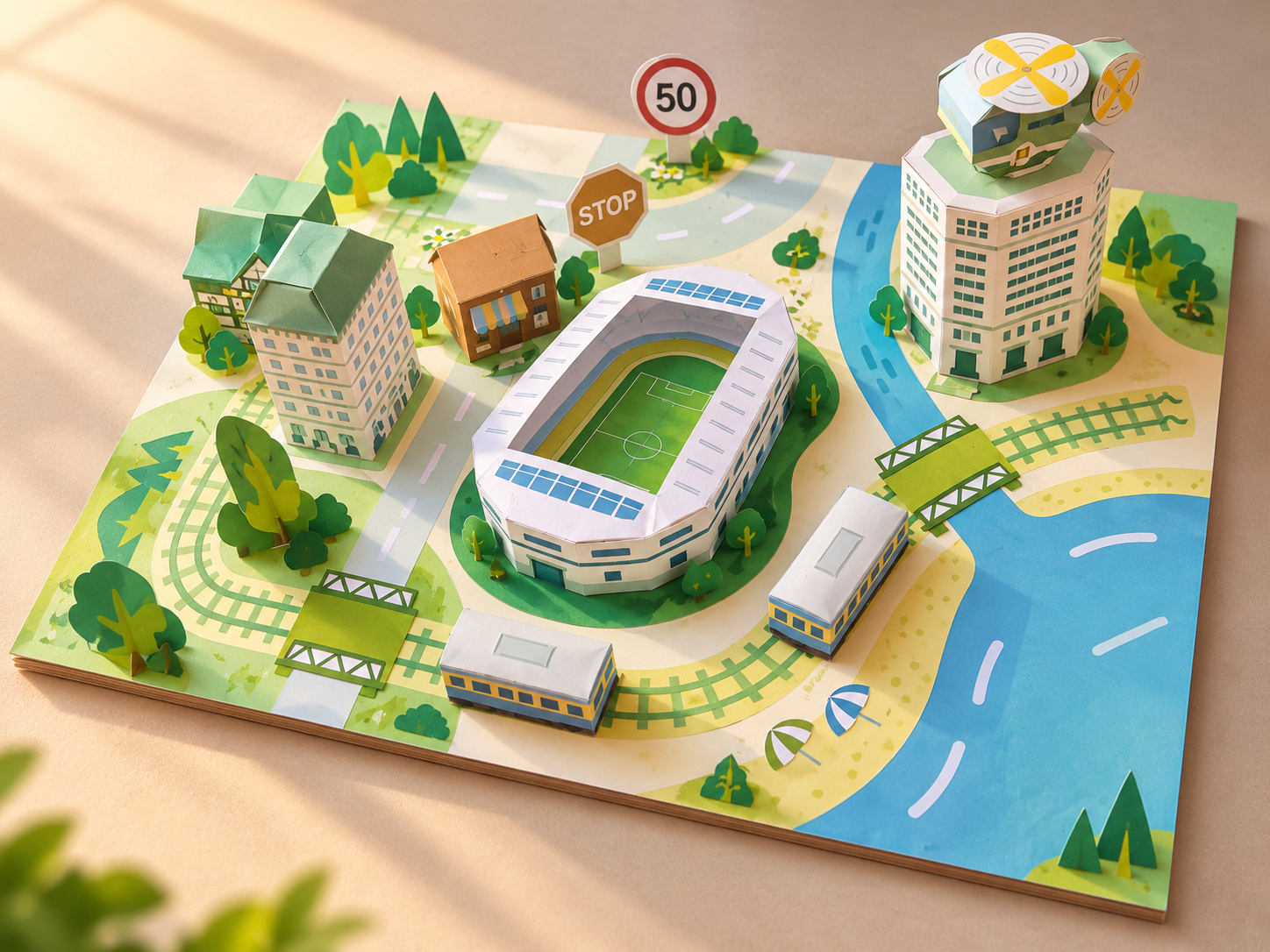
A city allowed me to combine architecture, transport, landscape and public space in one project.
It also gave me the freedom to create different building types and connect them through roads and rail.
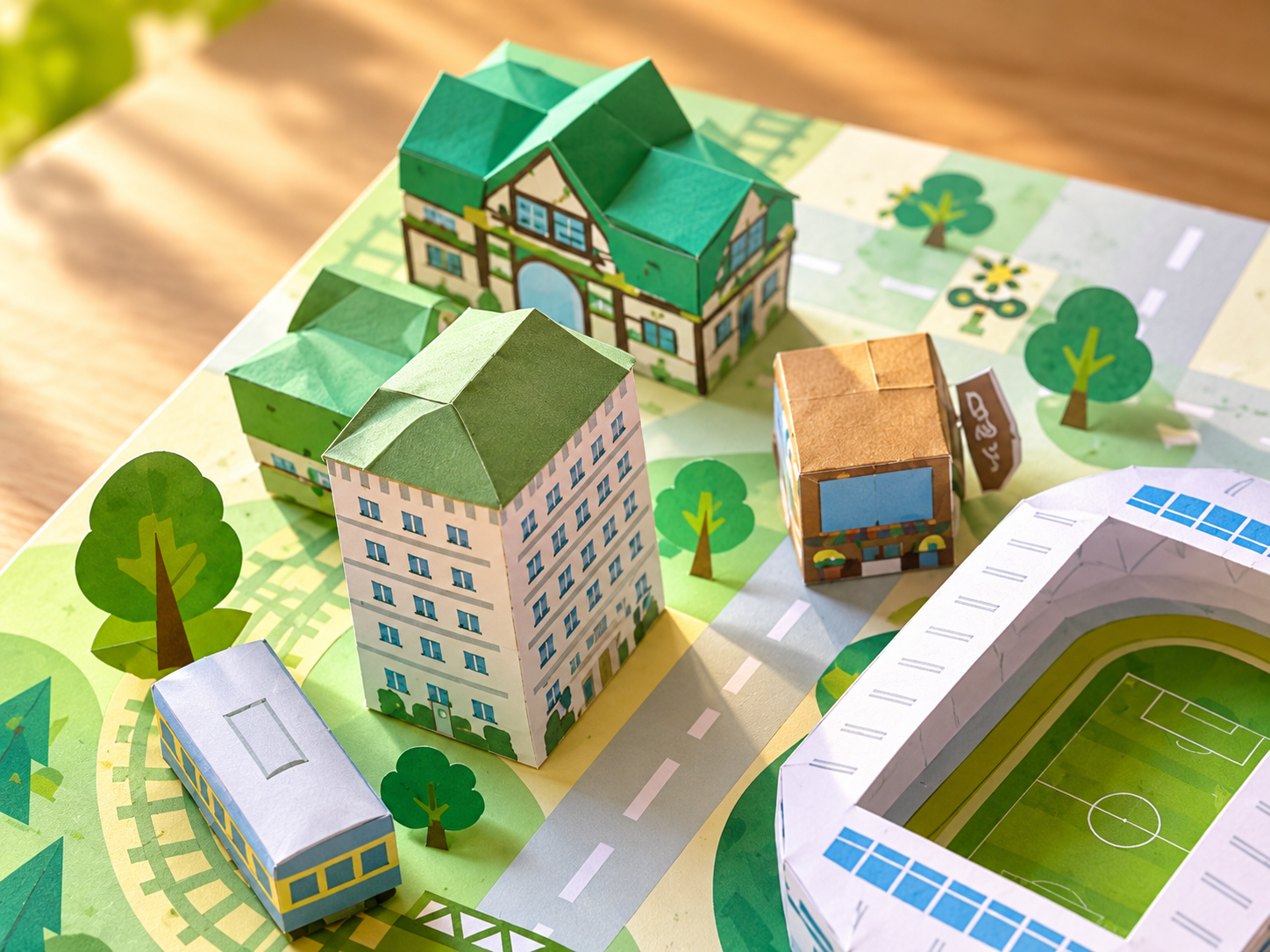
The stadium became the largest element in the composition and therefore the natural visual focus.
Placing other objects around it helped create hierarchy and made the board easier to understand.
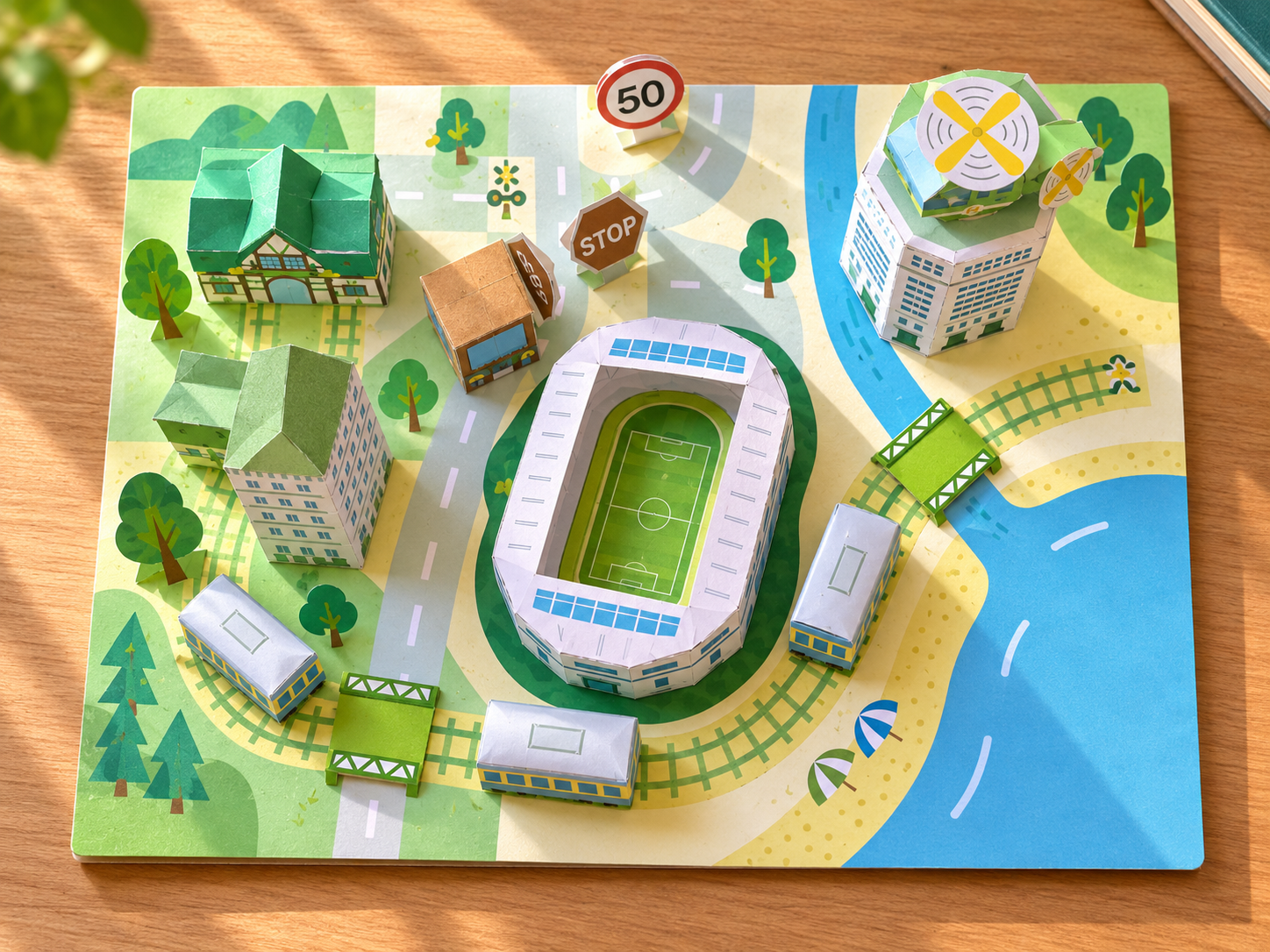
After the main stadium and buildings were established, smaller elements were added one by one.
Trains, tracks, bridges, trees, signs and water gave the city more movement and life.
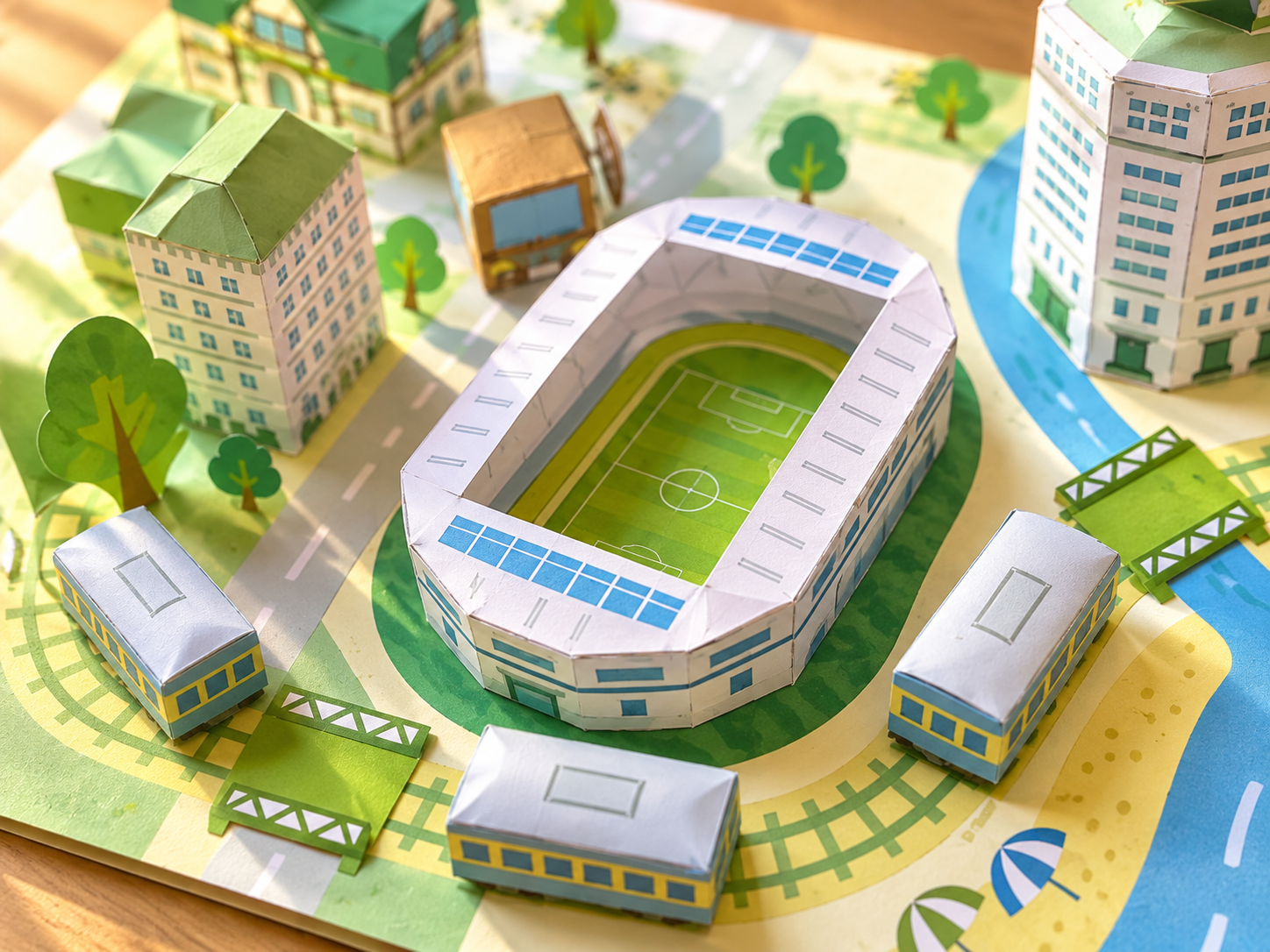
The model represents patience, imagination and the idea that something simple can become meaningful when enough care is put into it.
The handmade character is important because the folds and joins show the process behind the final result.
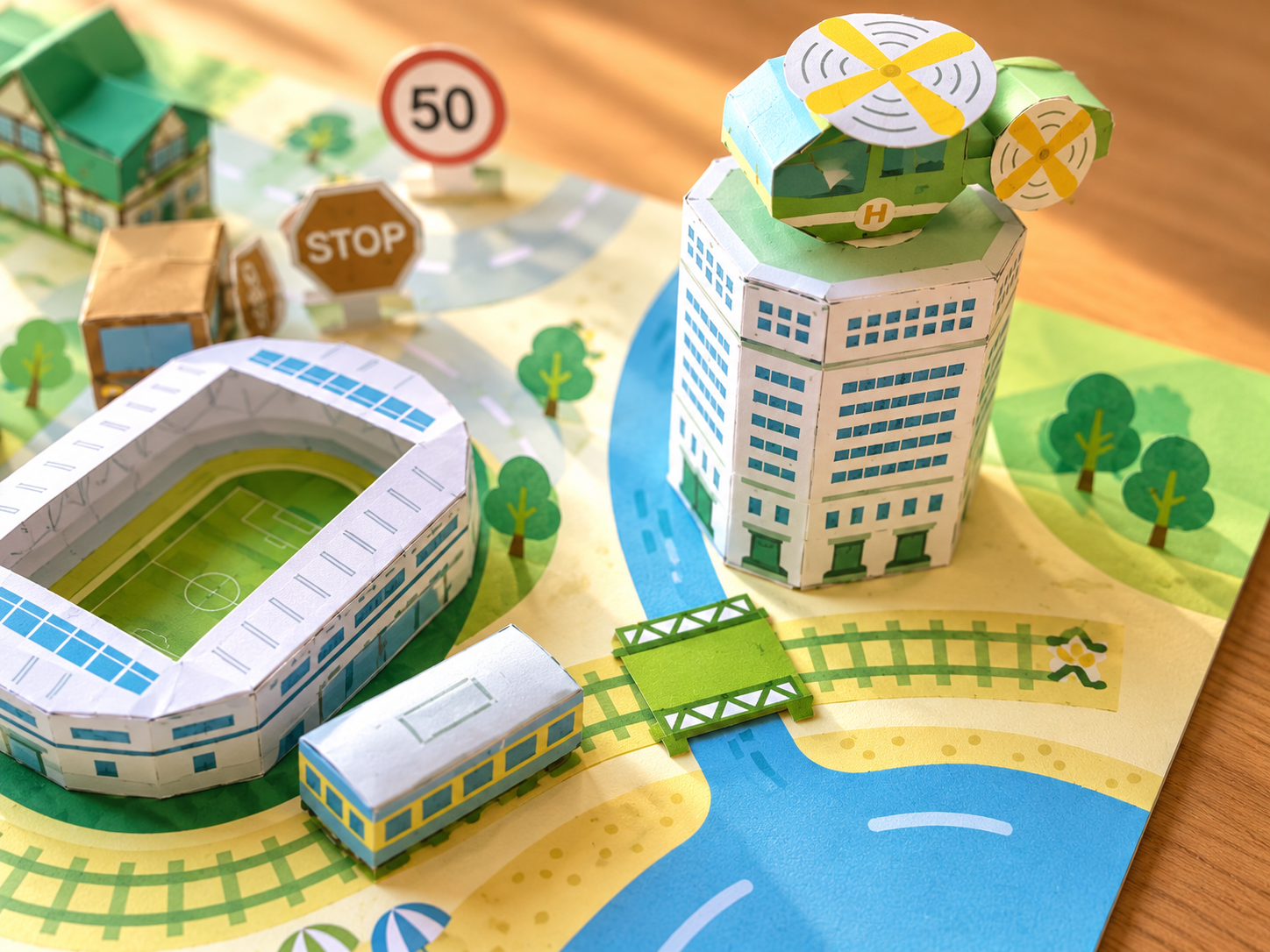
What would you change if this part of Paper City had to serve twice as many people?
How could the same area use less material, create more shade or support more greenery?
Which paper component would be hardest to remake accurately, and how could the template be improved?